Self-Determined Artistic Devices and Creative Organization: The Work of Art in Shaping Transversal Artistic Practices within Contemporary Art Production Structures
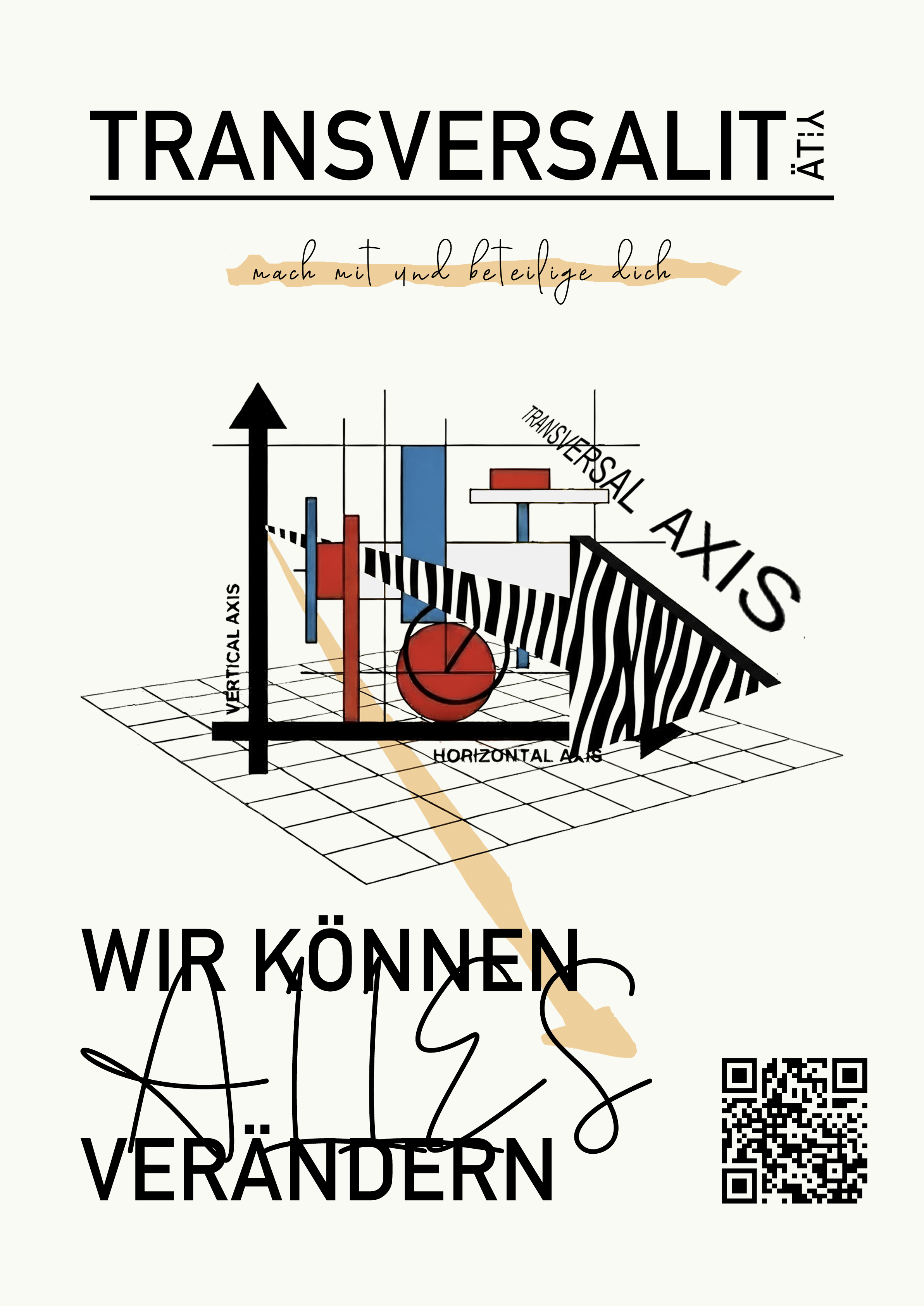
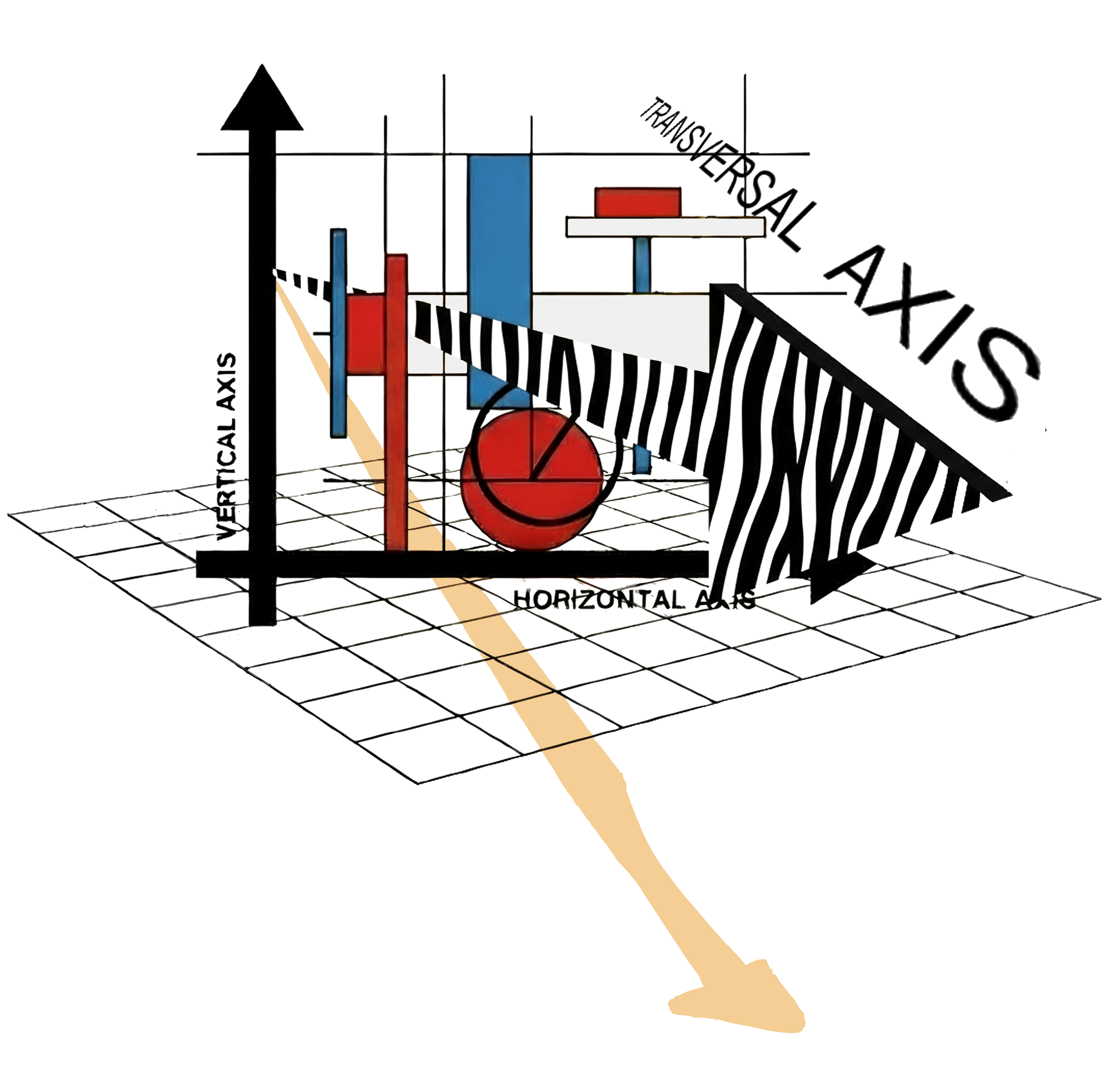
This artistic research project aims to explore and establish meaningful foundations for the concept of transversality as a collective organizational and productive axis, distinct from both horizontal and vertical structures of artistic production.
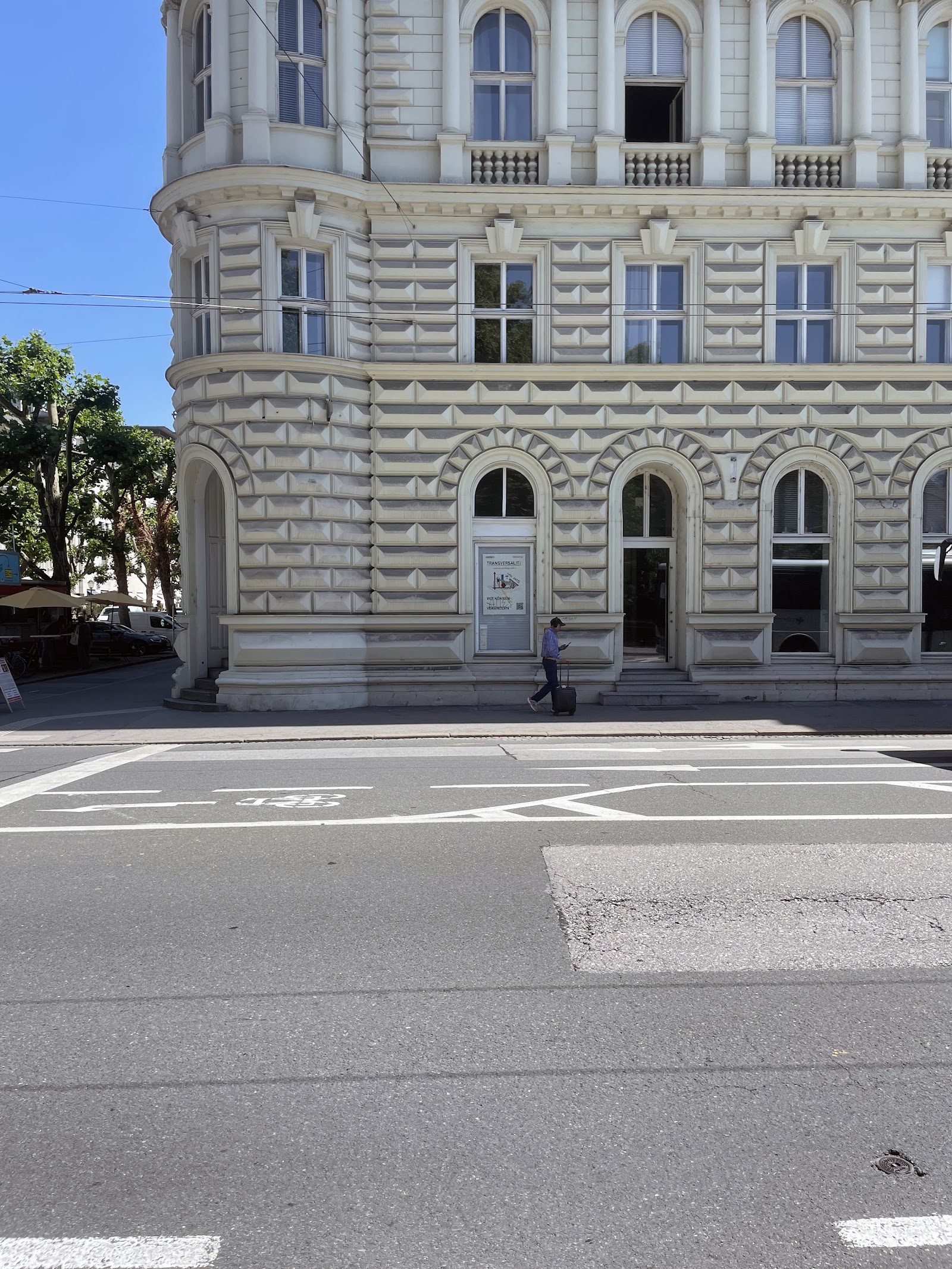
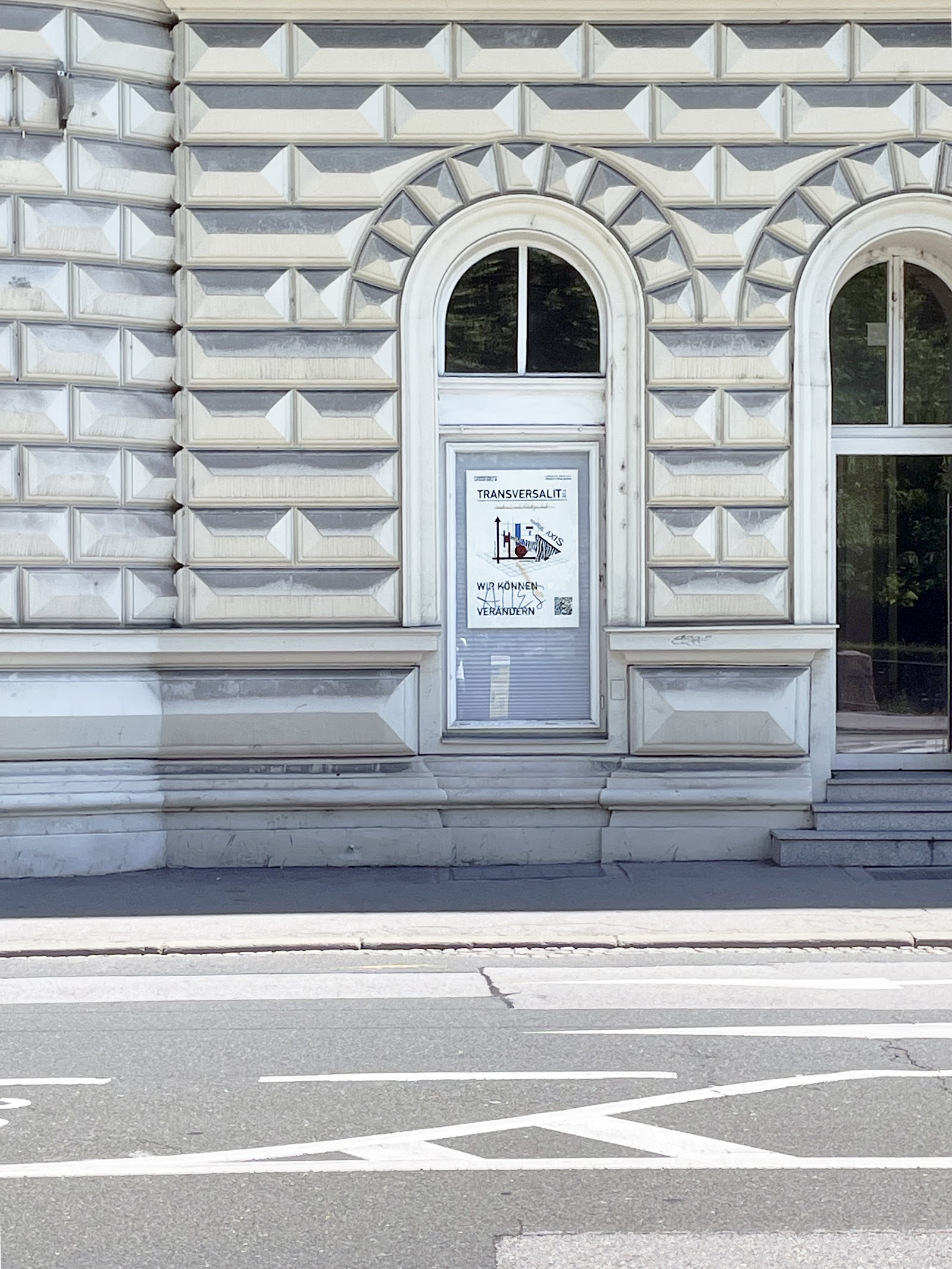
In order to do so, a collective process of art creation will be initiated in Salzburg and will take place at Franz-Josef-Straße 2.
02
Join & Participate
If this resonates with you and you would be interested in being part of this project, you are in the right place!
A space for those who wish to write about what is happening in the form of academic papers or similar formats, reflecting on the concept itself, on the practice being developed, or on other practices in light of the concept of transversality.
A place for sharing diverse, concrete, and transversal practices, understanding that many different and existing practices may resonate with the way the concept of transversality is being established in this project. It offers an opportunity to learn from one another and to connect across experiences.
Share your practice and transversal experience with us by reaching out here.
Exchange
A forum where you can ask questions, offer critiques, share comments, and express your impressions and feelings about what this project produces in you, in order to establish a direct connection and communication between us, as we develop the practice, and you.
All practice and work developed will be fully open and transparent in terms of its processes, as well as the creation and production of its artworks. Here, we will share all the work we produce, decided collectively and following the tenets of a transversal structure for producing art.
We’ve had our first meeting of TRANSVERSALIT(Y|ÄT)!
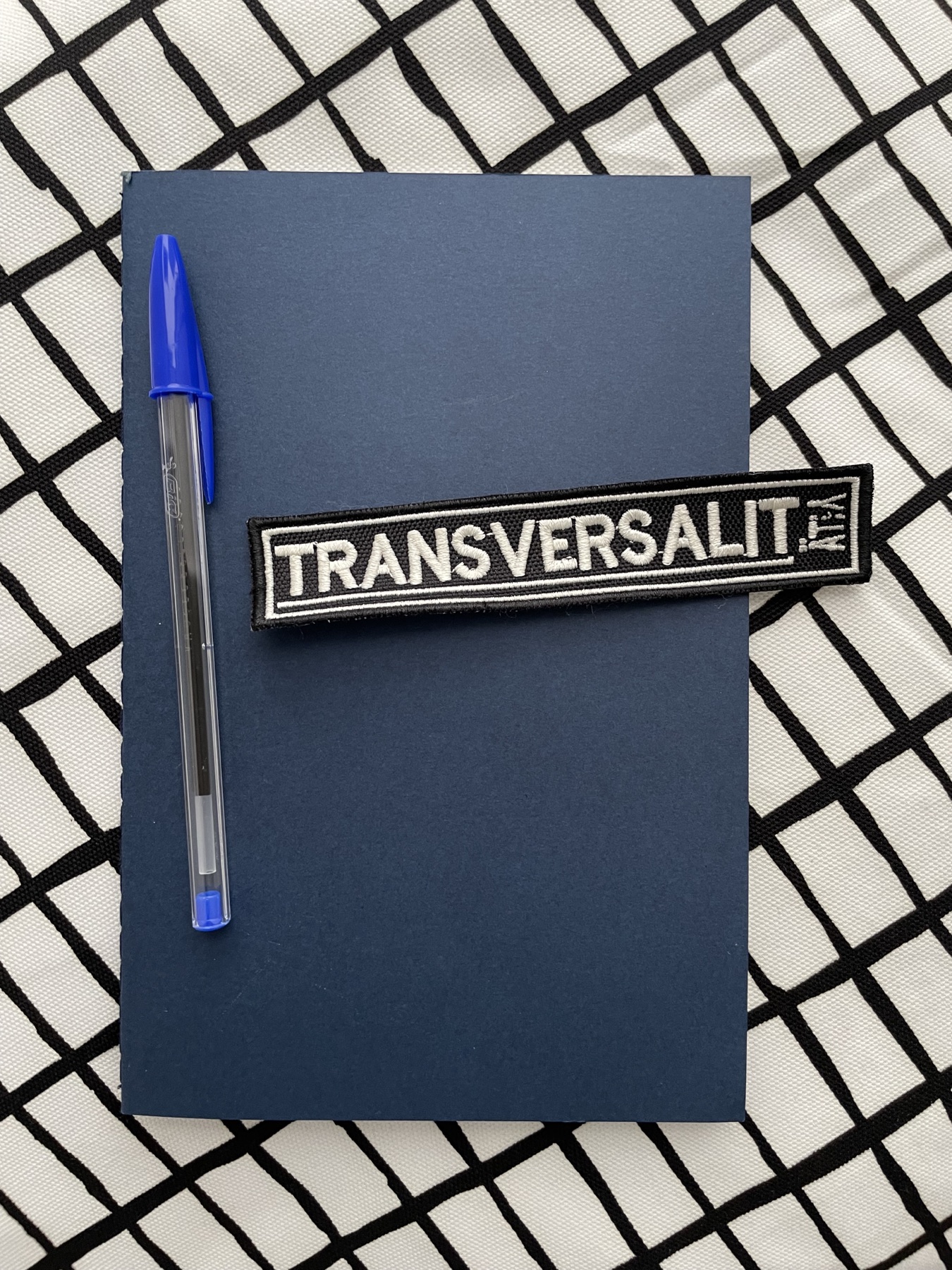
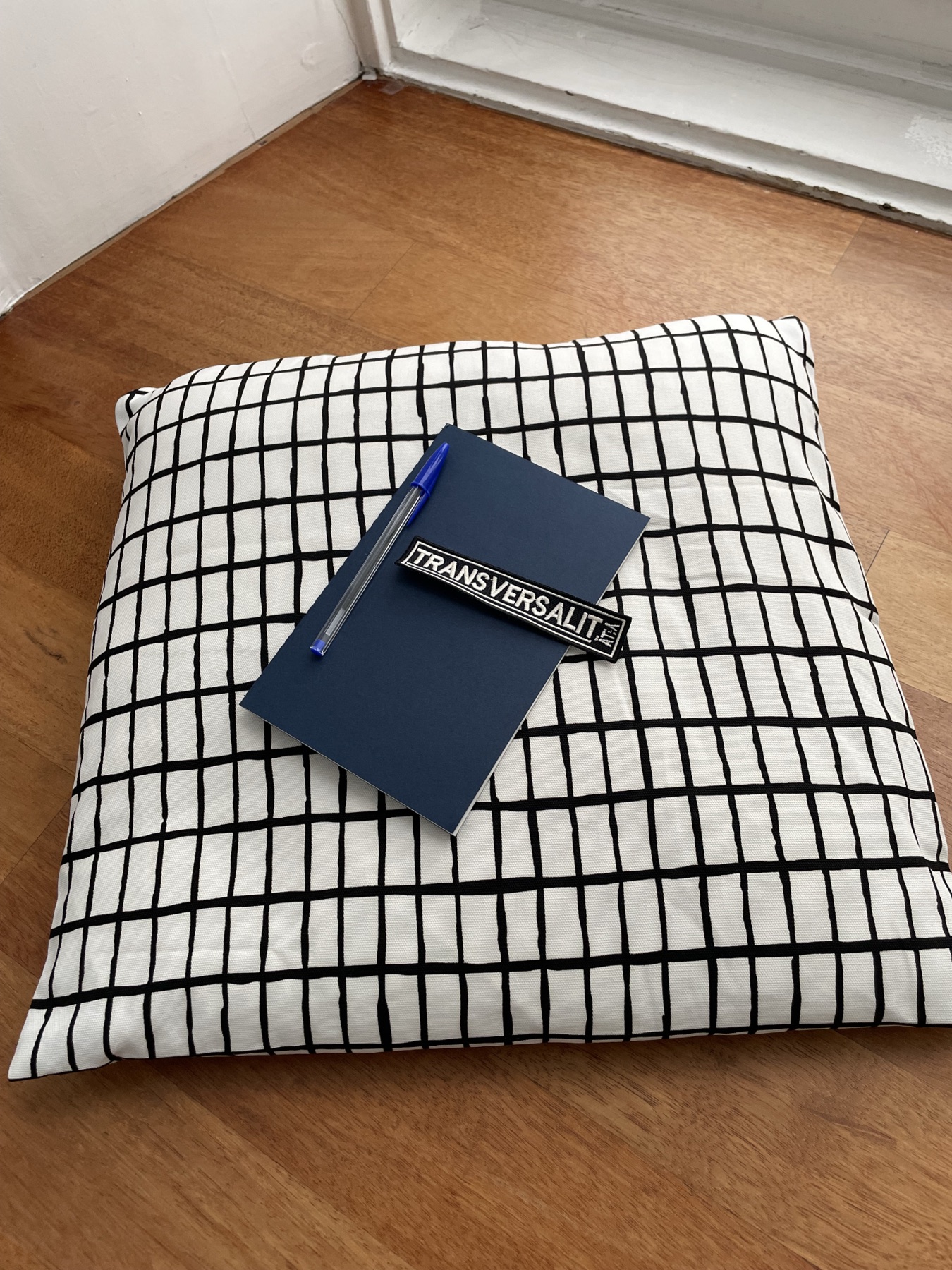
With our blue notebooks in hand, we explored our expectations, interests, desires, and hopes for this space, imagining together how we want to build it in a transversal way.
The Open Call is out!
05
FAQ
Find answers to common questions and helpful information!
What would participation concretely look like?
Concretely, participation will involve meeting with a group of people at Franz-Josef-Straße 2 and engaging in your own way in a creative and artistic process.
The exact dates and times will be scheduled according to the availability of those interested in taking part. People who are not based in Salzburg will also be welcome to participate remotely if they are enthusiastic about being part of the project.
The aim is to make participation as accessible and inclusive as possible, regardless of location.
Is it possible to join in the middle of the project?
Yes, absolutely!
The group is flexible and continuously evolving. The idea is to remain open and welcoming to everyone who is enthusiastic about participating, regardless of when they first hear about the project or decide to join.
If you join later, you will still have the same opportunity to contribute, influence, and reshape the aspects of the project that you engage with. Everyone participates in building the structure of the project, including people who arrive after some elements are already in place.
The project is intended to remain flexible, dynamic, and inviting throughout its development.
What if I would like to participate but have limited time?
This project seeks to break down barriers around availability, commitment, and participation, and to find ways of accommodating everyone who genuinely wants to be part of the process.
If your time is limited, you are still very welcome to join. Participation can take many forms and intensities, and there is no expectation that everyone contributes in the same way or at the same pace.
Together, we will find forms of engagement that are meaningful, enjoyable, and sustainable for each person involved.
What if I live in another city?
Distance does not have to be an obstacle. The project is conceived as a process that can unfold across different places and contexts.
While some activities may happen in person, participation is not limited to those who are physically present. We will explore ways of working that allow people to contribute from wherever they are.
What if I do not feel comfortable working in English or German?
Language should not prevent anyone from participating. We recognize that expressing ideas, doubts, and experiences can feel very different depending on the language being used.
Rather than treating fluency as a requirement, we aim to create conditions in which different linguistic backgrounds and levels of confidence can coexist.
Together, we will find ways of communicating that support participation rather than restrict it.
Who is invited to join?
Everyone who genuinely wants to be part of the process is invited.
Whether you come from an artistic background, another field, or no particular field at all, your curiosity, perspective, questions, and experiences are valuable.
The project grows through the diversity of the people who participate in it, and every contribution has the potential to enrich the collective exploration.
Is participation a commitment?
Only in the sense that every encounter changes something.
Participation can be brief or long-term, occasional or frequent. What matters is not the amount of time you invest, but the willingness to enter into a shared process and see where it might lead.
Every level of involvement is appreciated.
What if I am unsure about participating?
Then you are probably closer to many participants than you might think!
This project begins with questions rather than answers, and uncertainty is not something to overcome before joining. It can be a meaningful place from which to begin.
You are warmly welcome to come, explore, observe, participate, and discover whether the process resonates with you.
Can I just observe at first?
Definitely!
Observation, listening, and taking time to become familiar with the process are all valid forms of participation.
There is no pressure to contribute immediately. Sometimes the most meaningful forms of involvement begin simply by being present.
Do I need to know what I want to contribute?
Not at all!
Many contributions emerge unexpectedly through participation itself.
You do not need to arrive with a project, proposal, skill set, or clearly defined role. Often, contributions take shape through encounters, conversations, and shared experiences.
Curiosity is much more important than certainty.
Can I participate anonymously or without having my name shared publicly?
Of course!
You can participate in whichever way you prefer in terms of your public identity, as long as this does not interfere with a transversal way of creating collectively (which is, in part, what we have to explore together!).
What does Transversality really mean?
The project seeks to explore the practical configuration of a collective and creative way of producing art through an organizational structure that is neither vertical nor purely horizontal.
By vertical, we mean a way of producing art in which some people hold authority over others, occupy leadership positions, or make the final decisions. By horizontal, we mean a collective structure in which there are no differentiated roles and everything operates through complete equality of position.
The exploration of transversality seeks to discover a different possibility: a way in which collective practice can remain non-hierarchical while still allowing roles, responsibilities, and forms of organization to emerge and be arranged according to the needs and desires of the group itself.
What does the Overview section of this website mean?
The Overview section offers an entry point into the ideas, questions, and intentions from which this process begins. It is not a complete map of what will happen.
Many aspects of the project will emerge through participation, conversation, experimentation, and collective imagination. The project is something we discover, develop, and shape together as we go.
What is the work of art that is aimed to be produced?
There is no predefined artwork that the group is expected to create. Discovering what is produced is part of the process itself.
There may be one artwork, many artworks, or forms of creative activity that do not fit neatly into traditional definitions of art. The process itself is equally important. Beyond artistic objects, the methods, relationships, experiments, and ways of exploring transversality are also significant parts of the artistic work. In this sense, both the outcomes and the process of getting there become part of the project's creative practice.
Who is behind all of this?
This is an artistic research project developed within the PhD in the Arts Program at Mozarteum University.
Alejandro Aldea acts as the initiator of the project, bringing together the initial questions, framework, and invitation from which the process can unfold. While the project begins from this initiative, it is designed to be transformed by the people who take part in it.
Everything can be questioned, modified, and collectively reimagined. In that sense, the project belongs as much to its participants as it does to its point of departure.
How much do I need to understand before joining?
Very little.
You do not need to fully understand the concepts, methods, or ambitions of the project before becoming involved. Many forms of understanding emerge through participation itself. Curiosity is enough. Questions are enough. Joining can itself become a way of discovering what the project is.
What if I am not an artist?
You are extremely welcome!
Artistic practice intersects with countless forms of knowledge, experience, sensitivity, and imagination. The project values different perspectives and ways of engaging with the world. Whether or not you identify as an artist, your contribution can help shape the process in meaningful, unexpected, and inspiring ways.
What does collaborative artistic production mean?
The invitation of this project is to explore collaborative artistic production as a collective way of creating art that can accommodate everybody's interests, sensitivities, approaches, abilities, and forms of expression.
The aim is to build a group dynamic in which diverse people can come together to explore transversality through artistic practice while respecting and valuing their differences.
What kind of processes could this involve?
Any processes that the group decides are worth exploring!
To begin with, this may simply involve meeting at Franz-Josef-Straße 2, having conversations together, sharing ideas, and gradually shaping what we are interested in exploring and the ways in which we feel most comfortable doing so collectively. From there, the possibilities remain open and can evolve in many different directions.
What does ÄT/T stand for?
ÄT stands for Transversalität in German.
T stands for Transversality in English.
When you say “all the work we produce,” what kind of work do you mean?
That remains intentionally open.
It could include artworks, texts, conversations, performances, experiments, methods, gatherings, forms of documentation, collective reflections, shared tools, or things that we have not yet imagined.
The project values both outcomes and the processes through which they come into being. The group will have full control over what is published, what is shared, and what is presented publicly.
Is there a final form that the project is working towards?
Because the project is part of a PhD in the Arts, it will ultimately conclude with a written dissertation by the initiator, Alejandro Aldea.
However, the intention is for participants to have a meaningful voice and influence regarding how the project is represented within that text, so that the many contributions and experiences involved can be reflected as fully and respectfully as possible.
Beyond the dissertation, the project may generate exhibitions, publications, performances, gatherings, research outcomes, artistic works, or forms that do not yet have a name. As always, any public sharing will take place through processes of consent and collective agreement.
What if I want to withdraw my consent from something I previously agreed to?
One of the aims of this project is to differ from collective projects in which participants are invited to contribute but ultimately lose control over how their contributions are used because of an initial consent agreement.
Instead, this project seeks to develop a more careful and participatory approach to consent. The consent process itself can be collectively shaped by those involved, and participants will be able to revisit, reconsider, and withdraw consent if they later change their minds.
A useful comparison might be the drafting of a constitution. Participants collectively establish the principles and agreements that guide the project. If, over time, people feel that some of those agreements no longer reflect their wishes, the group can return to them, discuss them again, and collectively reshape the rules that govern its shared activities.
Will there be disagreements?
Almost certainly.
Whenever people with different experiences, ideas, desires, and perspectives come together, moments of friction are bound to appear. We do not see this as a problem to eliminate but as a natural and potentially productive part of collective work.
Disagreement can become a source of learning, creativity, and transformation. The project aims to build respectful and supportive ways of navigating these moments together.
What happens if we do not agree?
Agreement is not always necessary for collective work to continue.
Sometimes differences reveal new possibilities, challenge assumptions, or open paths that would otherwise remain invisible. The aim is not to erase disagreement but to develop ways of engaging with it respectfully, constructively, creatively, and with mutual care.
Can I leave the project whenever I want?
Definitely! You are free to leave the project whenever you feel it is the right decision for you. Participation is always voluntary, and there is no expectation that anyone must remain involved for a particular amount of time.
Of course, it could be valuable for the group to hear about your experience and understand what has led you to make that decision, as this may help us learn, grow, and improve the collective process. However, whether or not you choose to share your reasons is entirely up to you.
Your decision will be respected, and you are always welcome to determine your own level of involvement throughout the project.
If you have any questions or concerns that haven't been addressed here, feel free to contact us at transversality@transversality.art, and we'll be happy to answer them.
Newsletter
Updates from Transversality
Franz-Josef-Straße 2 · 5020, Salzburg, Austria — 2025>2028